

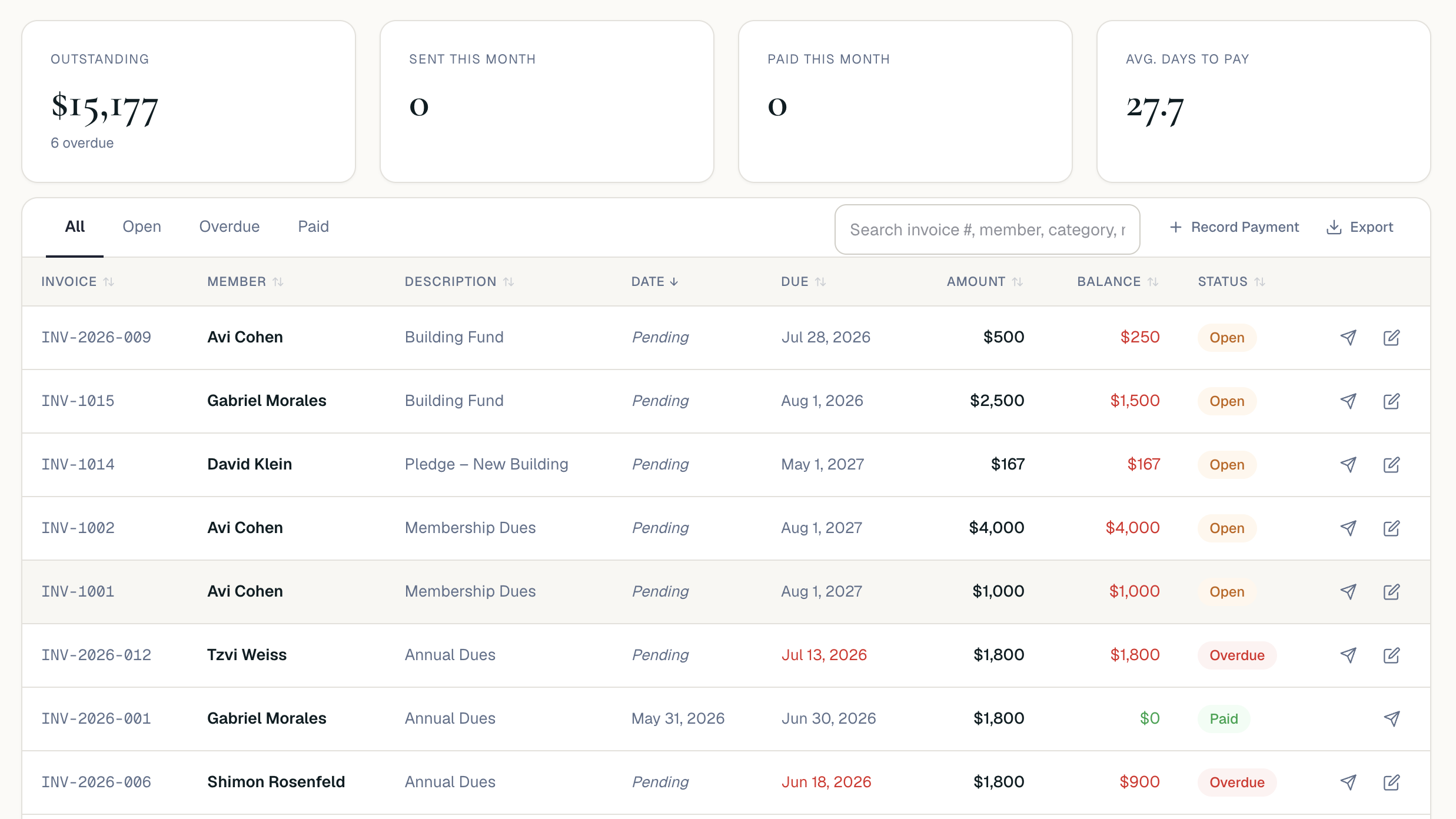
1. Someone asks "who's paid their dues this year?" and nobody can answer quickly
If the honest answer involves cross-referencing a spreadsheet against a folder of scanned checks, you don't have a dues problem — you have a visibility problem. A real membership system tracks who's invoiced, who's paid, and who's overdue in one place, and can tell you the answer in the time it takes to load a page, not the time it takes to open three files.
2. Your Shabbat schedule is a Word document someone reformats every Thursday night
If building next week's schedule means opening last week's file, changing the times, and hoping nobody left in an old candle-lighting time by mistake, that's an hour of manual work happening fifty-two times a year for something that should take five minutes. And when a flyer or event notice needs to go out too, that's a second document and a second email — more manual work, more chances for something to get missed.
3. Dues invoicing is "send an email every year and hope people remember"
Spreadsheets don't send reminders. They don't know a payment is overdue by 60 days. They don't flag anything for follow-up. If your dues process depends entirely on someone remembering to check a list and manually nudge people, it will fail exactly when you're busiest — right before the High Holidays, when membership renewal actually matters most.

4. You've had a payment "disappear" — someone paid, but nobody has a record of it
This is the spreadsheet failure mode that actually costs money. A check gets deposited but never logged. A Zelle payment comes in and gets mentally noted but not written down anywhere. Three months later, you're sending a dues reminder to someone who already paid, and now you look disorganized to the one member you most wanted to keep happy.
5. Nobody know a member's status without asking the person who "keeps the list"
If your membership records live in one person's head plus their personal spreadsheet, that's not a system — that's a single point of failure. What happens when that person is on vacation? Away for the summer? No longer volunteering next year? A shul's membership and billing history shouldn't be one person's personal file.
The actual fix
None of this requires enterprise software or a six-month implementation. It requires one place where membership, dues, and communication live together — a shul admin can see who's paid, publish a schedule in minutes instead of an evening, and never wonder where a payment went. That's the entire premise behind GabbaiPro: replace the spreadsheet-and-email patchwork with one system built around how a shul actually runs, not how a generic CRM assumes a business runs.
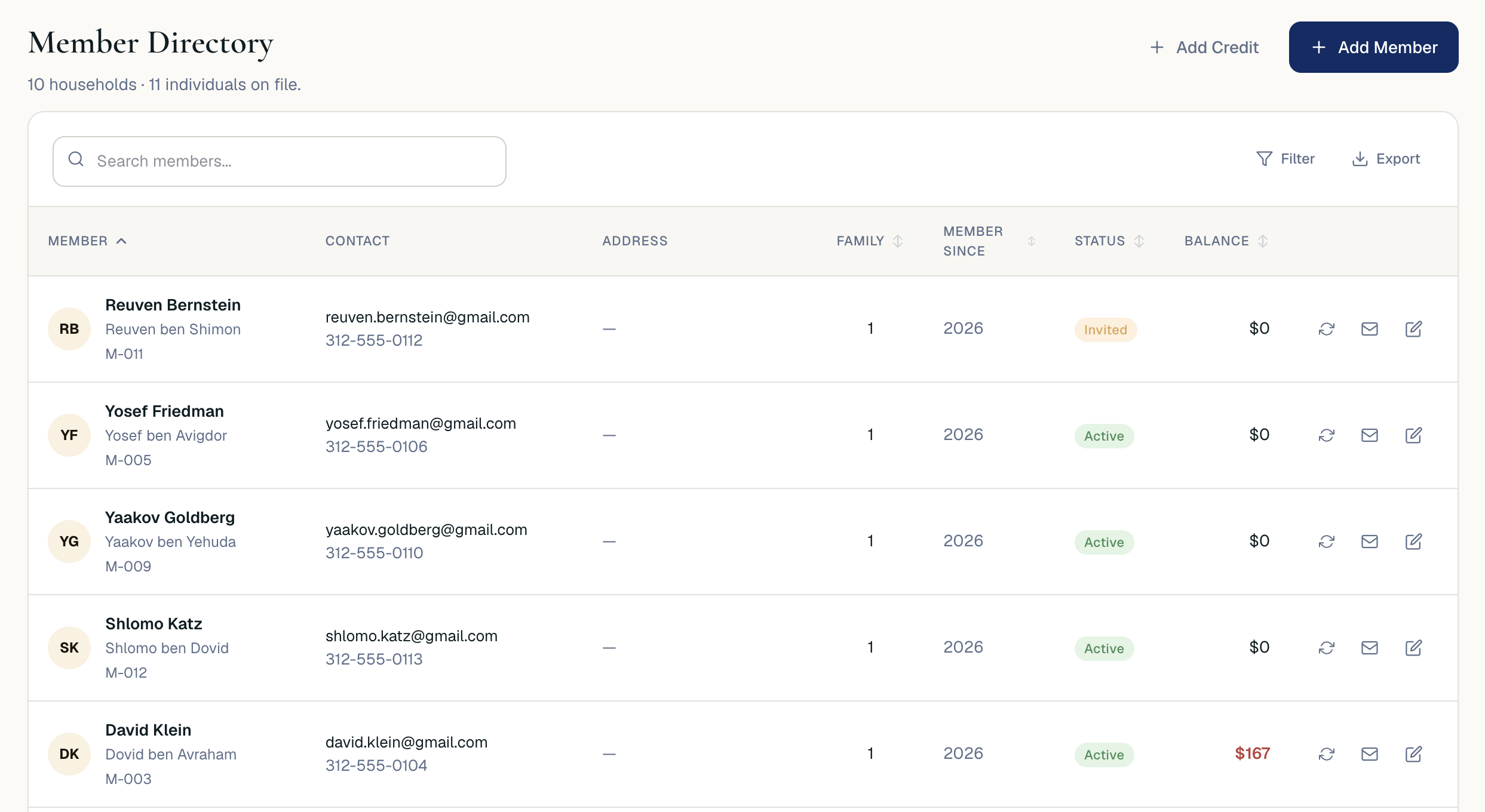
If more than two of these sound familiar, it's probably time to look at what a dedicated shul platform actually changes day to day.